Laser Vein Treatment vs Sclerotherapy: What’s the Difference?
Laser vein treatment and sclerotherapy are both minimally invasive ways to close abnormal veins, but they are generally used for different types of vein problems.
Endovenous laser treatment is commonly used to close larger superficial veins affected by venous reflux, while sclerotherapy is commonly used for spider veins, reticular veins, and selected varicose veins. Surface laser therapy can also be used for certain small spider veins, but it is different from endovenous laser ablation.
The right treatment depends on the size and location of the affected veins, whether underlying venous reflux is present, your symptoms, and ultrasound findings when appropriate.
What Is Laser Vein Treatment?
Laser vein treatment uses laser energy to close abnormal veins. The appropriate laser approach depends on the type, size, location, and underlying cause of the vein being treated.
Endovenous Laser Treatment for Varicose Veins
Endovenous laser ablation (EVLA), also called endovenous laser treatment or EVLT, uses laser-generated heat to close an abnormal superficial vein from inside.
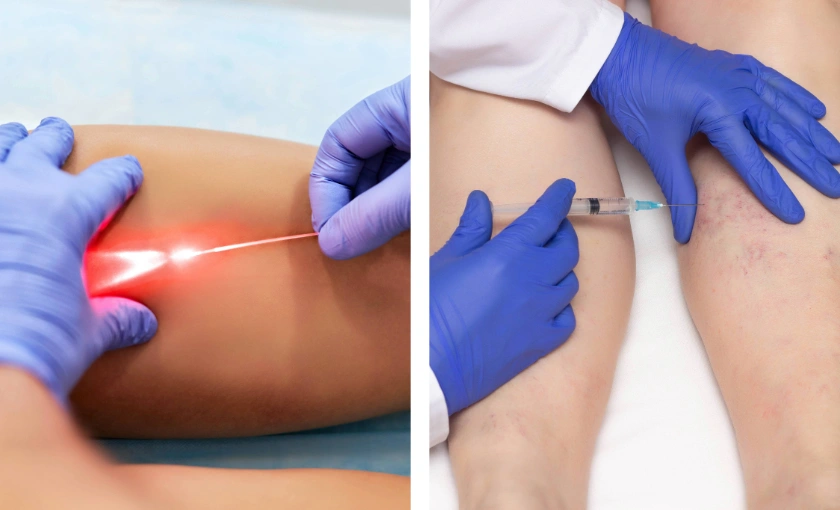
During the procedure, a thin laser fiber is placed inside the affected vein through a catheter. Ultrasound is used to guide the fiber into position, and thermal energy is delivered to the vein wall.
The treated vein closes, and blood is redirected through other functioning veins.
Endovenous laser ablation is an established treatment for superficial venous reflux associated with varicose veins and chronic venous insufficiency. Current clinical guidelines recommend endovenous ablation for many patients with symptomatic reflux in major superficial veins.
Learn more about laser vein treatment.
What About Laser Treatment for Spider Veins?
Laser treatment for spider veins is different from EVLA.
Surface laser treatment directs laser energy through the skin toward small superficial blood vessels. No catheter or laser fiber is inserted into the vein.
It may be considered for certain small spider veins, although sclerotherapy remains an established treatment for symptomatic spider and reticular veins. Current vascular guidelines specifically recommend liquid or foam sclerotherapy for symptomatic telangiectasias and reticular veins.
What Is Sclerotherapy?
Sclerotherapy is a minimally invasive vein treatment that uses an injected medication, called a sclerosant, to close an abnormal vein.
A small needle is used to inject the medication directly into the targeted vessel. The sclerosant affects the inner lining of the vein, causing the vein to close. The treated vessel is then gradually broken down by the body.
Sclerotherapy can be used for:
- Spider veins
- Reticular veins
- Selected varicose veins
- Certain superficial veins treated with ultrasound guidance
The Society for Vascular Surgery identifies sclerotherapy as a treatment for both varicose veins and small spider veins.
Learn more about sclerotherapy treatment.
Laser Vein Treatment vs Sclerotherapy: Key Differences
Sclerotherapy vs Laser for Spider Veins: Which Is Better?
Sclerotherapy is commonly used to treat spider veins on the legs, while surface laser therapy may be appropriate for selected small vessels.
Sclerotherapy may be useful when the spider veins can be accessed directly with a small needle. Surface laser therapy may be considered when vessels are particularly small or difficult to inject.
Neither treatment should be considered universally better.
A systematic review comparing treatments for telangiectasias and reticular veins found that sclerosing agents improved these veins compared with placebo, but the available evidence did not establish a clear overall advantage of sclerotherapy compared with laser treatment.
The size, color, depth, and location of the spider veins can influence which approach is most appropriate.
Sclerotherapy vs Laser Ablation for Varicose Veins
The comparison is different when larger varicose veins and underlying venous reflux are involved.
Endovenous laser ablation treats refluxing superficial veins using thermal energy, while sclerotherapy closes veins chemically with an injected sclerosant.
For patients with confirmed truncal venous reflux, guidelines generally favor endothermal ablation when it is suitable. Ultrasound-guided foam sclerotherapy may be considered when endothermal treatment is not appropriate.
This does not mean sclerotherapy is less effective for every type of vein. The treatments often address different vein anatomy.
Can Sclerotherapy Treat Varicose Veins?
Yes. Sclerotherapy is not limited to spider veins.
Depending on the vein being treated, a physician may use:
- Liquid sclerotherapy
- Foam sclerotherapy
- Ultrasound-guided sclerotherapy
Ultrasound-guided foam sclerotherapy can be used for selected larger superficial veins and varicose veins.
However, when a patient has significant reflux in a larger saphenous vein, endovenous ablation may be more appropriate.
Can Laser Treatment Remove Varicose Veins?
The term laser vein removal is commonly used, but endovenous laser treatment generally closes the affected vein rather than physically removing it.
During EVLA, thermal energy causes the abnormal vein to close. Over time, the body gradually remodels the treated vein.
Other procedures, such as ambulatory phlebectomy, physically remove superficial varicose veins through small openings in the skin.
So when patients search for laser vein removal on the legs, they are often referring to laser treatment that closes an abnormal vein rather than removing it surgically.
Which Treatment Is Used for Larger Varicose Veins?
Larger varicose veins may be connected to reflux in a deeper superficial vein such as the great or small saphenous vein.
When significant truncal reflux is found, treatment may include:
- Endovenous laser ablation
- Radiofrequency ablation
- VenaSeal™ when appropriate
Visible tributary varicose veins may also be treated with:
- Sclerotherapy
- Ambulatory phlebectomy
The Society for Vascular Surgery guidelines distinguish treatment of refluxing truncal veins from treatment of varicose tributaries, which may be addressed with procedures such as sclerotherapy or phlebectomy.
This is one reason a vascular ultrasound may be recommended before treatment.
Which Treatment Is Used for Spider Veins?
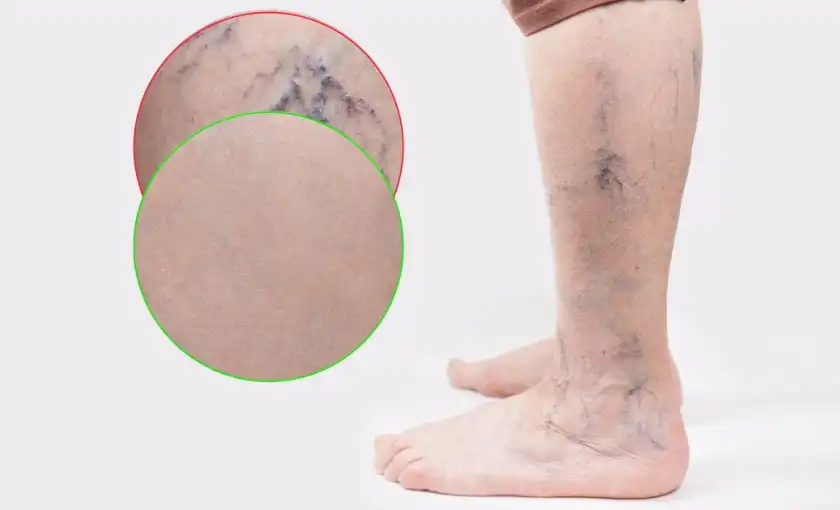
Spider veins are very small superficial vessels.
At BASS Vein Center, sclerotherapy is used for appropriate spider vein treatment.
Surface laser therapy is another method used in some settings for certain spider veins, but it should not be confused with endovenous laser ablation, which treats larger veins affected by venous reflux.
If visible spider veins are accompanied by leg swelling, heaviness, aching, or larger varicose veins, an evaluation may be needed to determine whether underlying venous disease is also present.
What Are the Side Effects of Laser Vein Treatment?
Endovenous laser treatment is minimally invasive, but temporary side effects can occur.
These may include:
- Bruising
- Tenderness
- Tightness
- Localized discomfort
- Inflammation
- Temporary sensory changes
- Skin discoloration
Less common complications can include nerve irritation, thermal injury, and thrombotic complications.
Individual risks depend on the vein being treated, anatomy, medical history, and other factors.
What Are the Side Effects of Sclerotherapy?
Possible temporary effects of sclerotherapy can include:
- Bruising
- Tenderness
- Temporary redness
- Local inflammation
- Skin pigmentation changes
- Small areas of trapped blood
- Superficial thrombophlebitis
Other complications are possible but less common.
The side-effect profile can also vary depending on whether liquid or foam sclerotherapy is used and which veins are being treated.
How Long Is Recovery After Laser Treatment or Sclerotherapy?
Both treatments are minimally invasive and are generally performed without the recovery associated with traditional open vein surgery.
After endovenous laser treatment, patients may temporarily experience bruising, tightness, or tenderness along the treated vein.
After sclerotherapy, patients may notice temporary bruising, redness, tenderness, or discoloration around the injection sites.
The time needed to return to normal activities varies according to:
- Type of treatment
- Number of veins treated
- Size and location of the veins
- Additional procedures performed
- Type of work or physical activity
- Individual recovery
Patients should follow the specific activity instructions provided by their treating physician.
How Much Do Laser Vein Treatment and Sclerotherapy Cost?
The cost of treatment varies because laser vein therapy and sclerotherapy can be used for very different vein conditions.
Factors that may affect cost include:
- Type of procedure
- Number of veins treated
- Number of treatment sessions
- Whether ultrasound guidance is required
- Medical necessity
- Insurance coverage
- Whether treatment is cosmetic
Laser Vein Treatment Cost
Endovenous laser treatment for symptomatic venous reflux may qualify for insurance coverage when medical necessity requirements are met.
Exact coverage varies by insurance plan and medical circumstances.
Spider Vein Laser Treatment Cost
Surface laser treatment performed solely for the appearance of spider veins is generally considered cosmetic and may not be covered by insurance.
Pricing can vary depending on the treatment area and number of sessions.
Sclerotherapy Cost
Sclerotherapy for spider veins performed primarily for cosmetic purposes is also commonly self-pay.
When sclerotherapy is used to treat medically significant venous disease, insurance considerations may differ.
An evaluation and insurance benefit review provide a more accurate estimate than a universal treatment price.
Which Is Better: Laser Vein Treatment or Sclerotherapy?
Neither procedure is best for every vein condition.
The appropriate treatment depends primarily on which veins are abnormal and why.
In general:
- Spider veins: Sclerotherapy is commonly used, while surface laser may be considered for selected vessels.
- Reticular veins: Sclerotherapy may be appropriate.
- Larger superficial veins with venous reflux: Endovenous ablation such as EVLA may be appropriate.
- Visible varicose tributaries: Sclerotherapy or ambulatory phlebectomy may be considered depending on anatomy.
Current vascular guidelines support choosing treatment according to the source and pattern of venous disease rather than using one procedure for every type of abnormal vein.
How Does a Vein Specialist Determine Which Treatment You Need?
A vein evaluation may include:
- Review of your symptoms
- Examination of visible veins
- Medical history
- Previous vein treatments
- Duplex ultrasound when venous reflux is suspected
Ultrasound can help determine whether visible varicose veins are connected to a larger refluxing superficial vein.
This distinction matters because treating a visible vein alone may not address the underlying source of venous pressure when significant reflux is present.
Where Can I Find Laser Vein Treatment or Sclerotherapy Near Me?
BASS Vein Center provides evaluation and treatment for varicose veins, spider veins, and chronic venous insufficiency throughout the East Bay and surrounding communities.
Available vein treatments include:
- Endovenous laser treatment
- Radiofrequency ablation
- VenaSeal™
- Sclerotherapy
- Ambulatory phlebectomy
- Conservative vein treatment
Treatment recommendations are based on your symptoms, examination, vein anatomy, and ultrasound findings when appropriate.
Frequently Asked Questions About Laser Vein Treatment and Sclerotherapy
What is the difference between laser vein treatment and sclerotherapy?
Laser vein treatment uses laser energy to close an abnormal vein. Sclerotherapy uses an injected medication to close the targeted vein. Endovenous laser treatment is commonly used for larger superficial veins with reflux, while sclerotherapy is commonly used for spider veins and selected varicose veins.
Is sclerotherapy better than laser for spider veins?
Neither treatment is universally better. Sclerotherapy is commonly used for leg spider veins, while surface laser treatment may be appropriate for certain small vessels. The best option depends on the size, depth, and location of the veins.
Is laser treatment effective for spider veins?
Surface laser therapy can treat certain spider veins. This is different from EVLA or EVLT, which places a laser fiber inside a larger superficial vein affected by reflux.
Is laser vein removal actually surgery?
Endovenous laser ablation is a minimally invasive catheter-based procedure rather than traditional open vein surgery. The vein is closed rather than surgically removed.
Can laser treatment remove varicose veins on the legs?
Endovenous laser treatment closes abnormal superficial veins rather than physically removing them. The treated vein is gradually remodeled by the body.
What is laser vein therapy?
Laser vein therapy is a broad term that may refer to endovenous laser ablation for larger veins or surface laser therapy for small superficial vessels. The procedures work differently.
What is the difference between sclerotherapy and ablation?
Sclerotherapy uses an injected chemical sclerosant to close a vein. Endovenous thermal ablation uses heat generated by laser or radiofrequency energy to close a vein from inside.
Is sclerotherapy used for varicose veins?
Yes. Sclerotherapy can be used for selected varicose veins as well as spider and reticular veins. Ultrasound-guided foam sclerotherapy may be used for certain larger superficial veins.
Is laser vein treatment used for larger varicose veins?
Endovenous laser ablation is commonly used to treat refluxing superficial veins associated with varicose veins. Ultrasound findings help determine whether EVLA is appropriate.
How much does laser vein treatment cost?
Cost depends on the type of laser treatment, number of veins treated, medical necessity, insurance coverage, and other factors. An individualized evaluation is needed for an accurate estimate.
How much does spider vein laser treatment cost?
Surface laser treatment for spider veins is often cosmetic and may be self-pay. Cost varies based on the treatment area, number of vessels, and number of sessions required.
How much does sclerotherapy cost?
Sclerotherapy cost varies based on the number and type of veins treated, number of sessions, whether ultrasound guidance is needed, and whether treatment is medically necessary or cosmetic.
Note: Coverage varies between insurance plans. Please check with your insurance provider before scheduling. BASS Vein Center will verify your benefits so you understand any out-of-pocket costs ahead of treatment.
Medical Disclaimer: The information provided in this blog is for educational and informational purposes only and is not intended as medical advice, diagnosis, or treatment. BASS Medical Group does not endorse any specific tests, treatments, procedures, or opinions referenced in this content. Individual results may vary. Always consult with your physician or a qualified healthcare provider regarding any medical concerns or before making changes to your health regimen.