PAD vs CVI: What Is the Difference Between Arterial and Venous Insufficiency?
Peripheral artery disease (PAD) and chronic venous insufficiency (CVI) both affect circulation in the legs, but they involve different types of blood vessels and different problems with blood flow.
PAD is an arterial circulation problem in which narrowed or blocked arteries reduce blood flow from the heart to the legs. CVI is a venous circulation problem in which damaged vein valves make it difficult for blood to return from the legs toward the heart.
This difference helps explain why PAD often causes leg pain with walking, coldness, or slow-healing wounds, while CVI more commonly causes swelling, heaviness, varicose veins, and skin changes around the lower legs and ankles.
Understanding PAD vs CVI can help you recognize which symptoms may be related to arterial disease, venous disease, or another vascular condition.
What Is the Difference Between PAD and CVI?
The simplest difference is the direction of the circulation problem:
- Peripheral artery disease (PAD): Not enough blood is reaching the leg because the arteries are narrowed or blocked.
- Chronic venous insufficiency (CVI): Blood reaches the leg, but the veins have difficulty returning it toward the heart because vein valves are not working effectively.
Both conditions can cause leg discomfort, but their symptoms, risk factors, testing, and treatment can be very different.
PAD vs CVI: Quick Comparison
What Is Peripheral Artery Disease?
Peripheral artery disease is a circulation disorder caused by narrowing or blockage of arteries that carry blood to the limbs, most commonly the legs.
Atherosclerosis, or plaque buildup inside the arteries, is the most common cause.
Because the arteries cannot deliver enough oxygen-rich blood to the leg muscles, symptoms may become noticeable during activity when the muscles need more blood.
The CDC describes the classic PAD symptom as leg pain, aching, or cramping during physical activity that improves with rest. However, many people with PAD do not have classic leg pain.
Learn more about peripheral artery disease.
What Does PAD Leg Pain Feel Like?
A common PAD symptom is intermittent claudication.
This may feel like:
- Cramping
- Aching
- Tightness
- Heaviness
- Fatigue
- Weakness
The discomfort can occur in the:
- Calf
- Thigh
- Hip
- Buttock
A characteristic pattern is pain that appears during walking or exercise and improves after stopping to rest.
More advanced arterial disease may also cause symptoms while resting.
What Other Symptoms Can PAD Cause?
Possible PAD signs and symptoms include:
- Leg pain during walking
- Weakness
- Coldness in the lower leg or foot
- Reduced hair growth on the legs
- Changes in skin appearance
- Poorly healing wounds
- Foot or toe sores that do not heal normally
PAD is also important because it is a manifestation of systemic atherosclerosis and is associated with increased cardiovascular risk.
What Is Chronic Venous Insufficiency?
Chronic venous insufficiency occurs when veins in the legs cannot efficiently return blood toward the heart.
Healthy leg veins contain one-way valves that help keep blood moving upward.
When these valves become damaged or do not close properly, blood can move backward and collect in the legs. This is called venous reflux.
The resulting increase in venous pressure can lead to:
- Leg swelling
- Aching
- Heaviness
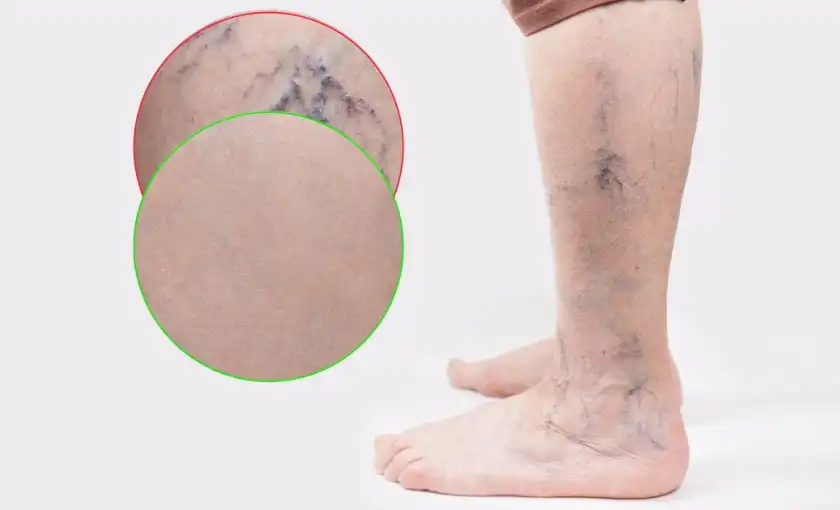
- Varicose veins
- Skin discoloration
- Itching
- Skin thickening
- Venous ulcers in more advanced disease
The Society for Vascular Surgery describes leg swelling and varicose veins among the manifestations of chronic venous insufficiency.
Learn more about chronic venous insufficiency.
What Does CVI Leg Pain Feel Like?
CVI symptoms are often described as:
- Aching
- Heaviness
- Tired legs
- Throbbing
- Burning
- Tightness
- Cramping
Swelling is also common, especially around the ankles and lower legs.
Unlike classic PAD pain, venous symptoms often become more noticeable after prolonged standing rather than specifically during walking.
Leg elevation may temporarily reduce venous swelling and discomfort.
Arterial vs Venous Insufficiency: What Is the Difference?
The terms arterial insufficiency and venous insufficiency describe two opposite circulation problems.
Arterial Insufficiency
Arterial insufficiency means the arteries cannot deliver enough blood to the tissues.
PAD is one of the most common causes.
Think of it as a delivery problem: oxygen-rich blood has difficulty reaching the leg.
Venous Insufficiency
Venous insufficiency means veins cannot efficiently return blood toward the heart.
Think of it as a return problem: blood reaches the leg but has difficulty moving back upward.
This difference is why the conditions often produce different symptom patterns.
Venous vs Arterial Insufficiency: Which Causes Swelling?
CVI is more strongly associated with chronic lower-leg and ankle swelling.
Venous reflux allows blood and fluid pressure to build in the lower legs, which can contribute to edema.
PAD typically causes reduced arterial blood flow rather than the characteristic dependent swelling associated with CVI.
However, leg swelling has many possible causes. Significant or unexplained swelling should not automatically be assumed to be venous insufficiency.
Venous vs Arterial Insufficiency: Which Causes Cold Feet?
Coldness of the foot or lower leg is more characteristic of arterial circulation problems such as PAD because reduced arterial flow means less warm, oxygenated blood is reaching the tissues.
CVI is more likely to cause:
- Swelling
- Heaviness
- Aching
- Varicose veins
- Skin discoloration
A persistently cold foot, particularly when accompanied by pain or poor wound healing, deserves vascular evaluation.
Which Causes Pain With Walking: PAD or CVI?
PAD is classically associated with leg pain that begins during walking or exercise and improves with rest.
This is called intermittent claudication.
CVI can also cause leg discomfort, but its pattern is typically different.
Venous pain may worsen with:
- Prolonged standing
- Long periods of sitting
- Swelling
- Later portions of the day
The symptom pattern can provide clues, but testing may be necessary to identify the actual cause.
Which Causes Varicose Veins: PAD or CVI?
Varicose veins are associated with venous disease, not PAD.
They develop when superficial veins enlarge due to abnormal venous pressure and reflux.
CVI can therefore be associated with:
- Varicose veins
- Spider veins
- Swollen legs
- Venous skin changes
PAD affects the arteries and does not directly cause varicose veins.
A patient can, however, have both arterial and venous disease at the same time.
Which Causes Skin Discoloration: PAD or CVI?
Both arterial and venous disease can cause skin changes, but the patterns differ.
CVI Skin Changes
Chronic venous insufficiency may cause:
- Brown or reddish discoloration near the ankles
- Stasis dermatitis
- Dry or itchy skin
- Thickened skin
- Venous ulcers
PAD Skin Changes
PAD can be associated with:
- Pale or discolored skin
- Changes in temperature
- Reduced hair growth
- Poor wound healing
- Tissue changes in more advanced disease
Skin appearance alone cannot reliably distinguish one vascular disease from another.
Arterial vs Venous Ulcers: How Are They Different?
Both arterial and venous disease can cause leg wounds, but the underlying circulation problem is different.
Venous ulcers are related to chronically elevated venous pressure and are commonly found around the lower leg and ankle.
Arterial ulcers occur because tissues are not receiving adequate arterial blood flow and are more commonly associated with the feet, toes, or pressure areas.
Wounds that are not healing normally should be medically evaluated because identifying the circulation problem is important before selecting treatment.
Can You Have PAD and CVI at the Same Time?
Yes. A person can have both peripheral artery disease and chronic venous insufficiency.
Having one condition does not protect against the other.
This is especially relevant when considering compression therapy.
Compression is commonly used to manage venous disease, but clinicians may need to evaluate arterial circulation first when PAD is suspected because significant arterial insufficiency can affect whether and how compression should be used.
An ankle-brachial index or other arterial testing may be recommended when arterial disease is a concern. The ABI is a standard noninvasive test used to evaluate PAD.
How Is PAD Diagnosed?
Diagnosis begins with symptoms, medical history, and examination.
A common first test is the ankle-brachial index (ABI).
The ABI compares blood pressure at the ankle with blood pressure in the arm. NHLBI describes it as the test usually used first when diagnosing PAD.
Additional arterial testing may include:
- Arterial duplex ultrasound
- Exercise ABI testing
- CT angiography
- MR angiography
- Other vascular imaging
The appropriate testing depends on the patient's symptoms and findings.
How Is Chronic Venous Insufficiency Diagnosed?
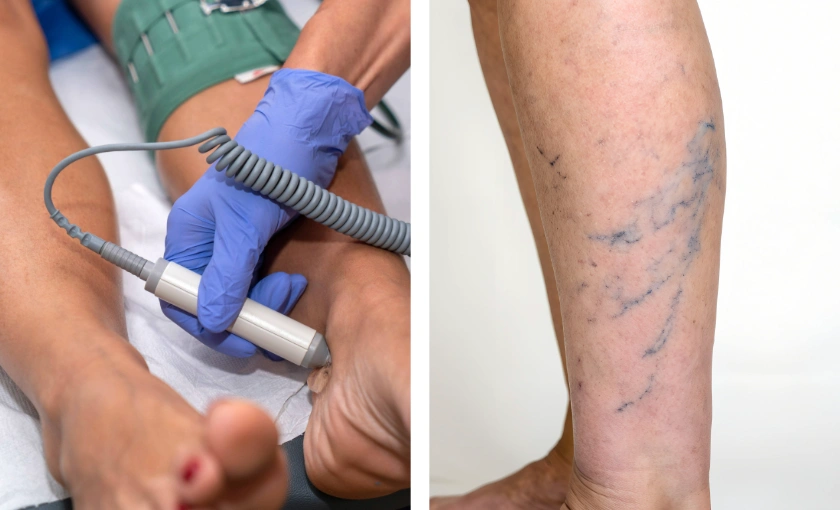
CVI is typically evaluated with a physical examination and venous duplex ultrasound.
The ultrasound can evaluate:
- Direction of blood flow
- Valve function
- Venous reflux
- Affected superficial veins
- Other abnormalities in the venous system
Cleveland Clinic describes vascular ultrasound as part of the diagnostic evaluation for chronic venous insufficiency.
What Is the Difference Between an ABI and a Venous Ultrasound?
The tests evaluate different circulation problems.
Ankle-Brachial Index
An ABI compares blood pressure in the ankle with blood pressure in the arm and helps identify reduced arterial circulation associated with PAD.
Venous Duplex Ultrasound
A venous ultrasound evaluates the veins and can show whether blood is flowing backward because valves are not functioning properly.
Someone with complex symptoms may require both arterial and venous testing.
How Is PAD Treated?
PAD treatment focuses on improving cardiovascular health, reducing the risk of disease progression, and addressing inadequate arterial blood flow.
Depending on the patient, treatment may involve:
- Smoking cessation
- Structured exercise
- Management of diabetes
- Blood pressure management
- Cholesterol treatment
- Antiplatelet or other medications when appropriate
- Angioplasty or stenting
- Bypass or other revascularization procedures in selected cases
Treatment depends on symptom severity, arterial anatomy, and overall cardiovascular risk.
How Is Chronic Venous Insufficiency Treated?
Treatment for CVI depends on symptoms, ultrasound findings, and severity.
Conservative approaches may include:
- Regular movement
- Leg elevation
- Compression therapy when appropriate
- Weight management
- Other measures to manage swelling
When significant venous reflux is present, treatment may include:
- Radiofrequency ablation
- Endovenous laser treatment
- VenaSeal™
- Sclerotherapy
- Ambulatory phlebectomy
The appropriate procedure depends on which veins are abnormal.
Is PAD the Same as PVD?
Not exactly.
Peripheral vascular disease (PVD) is a broad term referring to diseases affecting blood vessels outside the heart and brain.
Peripheral artery disease (PAD) specifically refers to disease affecting the arteries.
Because the terms have sometimes been used interchangeably, patients may see “PVD” used when the writer actually means PAD.
For clarity:
- PAD = arterial disease
- CVI = venous disease
- PVD = broader vascular terminology that may encompass multiple peripheral blood vessel disorders
When researching symptoms or treatment, identifying whether the problem is arterial or venous is more useful than relying on the term PVD alone.
PAD vs PVD: What Should Patients Know?
PAD is a specific type of vascular disease.
PVD can be used more broadly, so PAD vs PVD is not necessarily an either-or comparison.
Someone diagnosed specifically with PAD has disease affecting peripheral arteries.
Someone told they have “peripheral vascular disease” should ask which blood vessels are affected and what specific diagnosis is being used.
Is CVI the Same as Peripheral Venous Disease?
CVI is one form of chronic venous disease affecting the leg veins.
“Peripheral venous disease” is a broader description that can refer to conditions affecting peripheral veins.
CVI specifically describes a chronic problem in which venous valves or other venous abnormalities prevent efficient return of blood from the legs.
This distinction is important when comparing searches such as PAD vs peripheral venous disease, because PAD and venous disease involve different sides of the circulatory system.
PAD vs Peripheral Venous Disease: What Is the Main Difference?
The main difference is the blood vessel involved:
- PAD affects arteries.
- Peripheral venous disease affects veins.
PAD limits blood delivery to the extremities.
Venous disease interferes with blood returning toward the heart.
Symptoms and treatment therefore differ substantially.
Which Is More Serious, PAD or CVI?
Both conditions deserve appropriate medical care, but their potential complications differ.
PAD is part of systemic atherosclerotic cardiovascular disease and is associated with increased risk of cardiovascular events. Severe arterial insufficiency can also threaten tissue viability.
CVI can progressively damage the lower legs and may lead to:
- Persistent edema
- Stasis dermatitis
- Skin thickening
- Recurrent inflammation
- Venous ulcers
It is more useful to determine the severity of the individual condition than to label one universally more serious than the other.
When Should You See a Vascular Specialist?
Consider vascular evaluation if you experience:
- Leg pain that repeatedly occurs during walking
- Persistent leg heaviness
- Leg or ankle swelling
- Varicose veins
- A cold foot or lower leg
- Skin discoloration
- Wounds that are slow to heal
- Persistent vascular-type leg symptoms
- A combination of arterial and venous symptoms
Different tests may be required depending on whether arterial disease, venous disease, or both are suspected.
PAD and Chronic Venous Insufficiency Evaluation at BASS Vein Center
PAD and CVI can both affect the legs, but they require different diagnostic and treatment approaches.
BASS Vein Center evaluates vascular symptoms to determine whether arterial disease, venous insufficiency, or another circulation problem may be contributing.
Patients with symptoms of chronic venous insufficiency may undergo venous ultrasound to evaluate reflux, while suspected arterial disease may require ABI testing or other arterial vascular studies.
Schedule a Vascular Evaluation
Frequently Asked Questions About PAD vs CVI
What is the difference between PAD and CVI?
PAD affects arteries and reduces blood flow traveling from the heart to the legs. CVI affects veins and makes it difficult for blood to return from the legs toward the heart.
What is the difference between arterial and venous insufficiency?
Arterial insufficiency means tissues are not receiving adequate arterial blood flow. Venous insufficiency means blood has difficulty returning through the veins, which can cause pooling, swelling, and increased pressure in the legs.
Does PAD cause swelling in the legs?
PAD is not typically associated with the same dependent ankle and lower-leg swelling seen with chronic venous insufficiency. Significant swelling may suggest venous disease or another condition and should be evaluated.
Which causes leg pain, PAD or CVI?
Both can cause leg pain. PAD classically causes pain or cramping during walking that improves with rest. CVI more commonly causes aching, heaviness, swelling, and discomfort that may worsen after prolonged standing.
Is PAD the same as venous insufficiency?
No. PAD is an arterial disease. Venous insufficiency affects the veins and their ability to return blood toward the heart.
Is PAD the same as PVD?
PAD is a specific arterial condition. PVD is a broader term for peripheral vascular disorders and may be used inconsistently. For treatment decisions, the specific diagnosis is more important than the general PVD label.
What is the difference between PAD and peripheral venous disease?
PAD affects arteries carrying blood toward the legs. Peripheral venous disease affects veins carrying blood back toward the heart.
Can you have PAD and CVI together?
Yes. Arterial disease and venous insufficiency can occur in the same patient. This can affect evaluation and treatment decisions, including whether compression therapy is appropriate.
Is an ABI used to diagnose CVI?
No. The ankle-brachial index is primarily used to evaluate arterial circulation and PAD. CVI is generally evaluated using venous duplex ultrasound.
What test shows venous insufficiency?
Venous duplex ultrasound can evaluate the direction of blood flow and identify abnormal venous reflux associated with chronic venous insufficiency.
Is PAD worse when walking?
Classic PAD symptoms often become noticeable during walking or exercise because working muscles require more blood. The discomfort may improve with rest.
Does CVI get worse when standing?
Venous symptoms such as heaviness and swelling may become more noticeable after prolonged standing because blood can pool in the lower legs when venous valves are not functioning effectively.
Note: Coverage varies between insurance plans. Please check with your insurance provider before scheduling. BASS Vein Center will verify your benefits so you understand any out-of-pocket costs ahead of treatment.
Medical Disclaimer: The information provided in this blog is for educational and informational purposes only and is not intended as medical advice, diagnosis, or treatment. BASS Medical Group does not endorse any specific tests, treatments, procedures, or opinions referenced in this content. Individual results may vary. Always consult with your physician or a qualified healthcare provider regarding any medical concerns or before making changes to your health regimen.