Can Varicose Veins Burst? Signs, Bleeding & Treatment
Yes, varicose veins can burst and bleed. A varicose vein near the surface of the skin can rupture when the overlying skin becomes thin, damaged, irritated, or injured. Because pressure inside diseased superficial veins can be elevated, bleeding may be more significant than expected from a very small opening in the skin.
A ruptured varicose vein should be taken seriously. Immediate pressure and leg elevation can help control the bleeding, but the affected vein should also be evaluated because bleeding can happen again if the underlying venous disease is not addressed. Current vascular guidelines recommend prompt referral after bleeding from a varicose vein and evaluation for the venous reflux responsible for the problem.
Can Varicose Veins Burst?
Yes. A superficial varicose vein can rupture, causing bleeding through the skin or bleeding beneath the skin.
Varicose veins develop when valves inside superficial leg veins do not function effectively. Blood can flow backward and collect in the vein, causing increased pressure, enlargement, and bulging.
Over time, the skin covering a prominent varicose vein may become fragile, particularly when chronic venous disease has caused:
- Dry or irritated skin
- Stasis dermatitis
- Skin discoloration
- Thin skin over a prominent vein
- A small scab or ulcer
- Previous bleeding
- Chronic swelling
NHS England notes that bleeding is uncommon but can occur when the skin over a varicose vein becomes thin or develops a small scab.
What Happens if a Varicose Vein Bursts?
What happens depends on whether the vein bleeds through the skin or beneath it.
Bleeding Through the Skin
A superficial varicose vein may begin bleeding after:
- A minor bump
- Scratching
- Shaving
- Skin breakdown
- An ulcer or small scab opening
- Another minor injury to fragile skin
Because the vein is under increased venous pressure, bleeding from a very small opening can sometimes be surprisingly brisk.
Bleeding Under the Skin
Damage to a superficial vessel can sometimes cause blood to collect beneath the skin, producing bruising or a localized collection of blood.
However, a sudden bruise on the leg does not automatically mean a varicose vein has ruptured. Bruising can have many causes.
Large, unexplained, painful, or recurrent bruising should be medically evaluated.
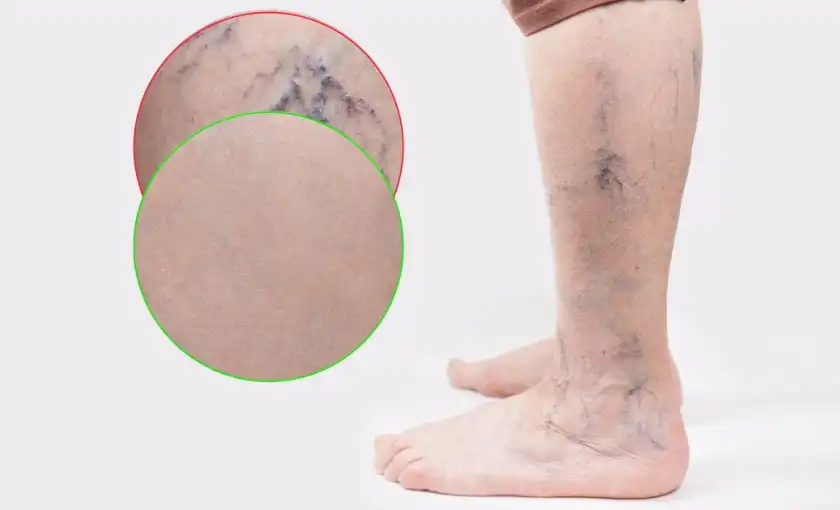
What Does a Ruptured Varicose Vein Look Like?
A ruptured varicose vein may present differently depending on whether there is external bleeding.
Possible signs include:
- Bleeding from a small opening over a visible vein
- A prominent varicose vein beneath damaged skin
- New bruising
- Tenderness around the area
- Swelling
- Skin discoloration
- A small scab or ulcer over a vein
The amount of bleeding may appear disproportionate to the size of the skin opening because elevated venous pressure can maintain blood flow from the injured vein.
Can a Varicose Vein “Explode”?
People sometimes search for “varicose veins exploding” when they experience sudden bleeding from a vein.
Varicose veins do not literally explode.
A more accurate description is that a superficial varicose vein ruptures or begins bleeding through damaged skin.
The opening may be very small, even when there appears to be a considerable amount of bleeding.
This can be frightening, but appropriate first aid and medical evaluation can help control the immediate problem and reduce the risk of another episode.
What Should You Do if a Varicose Vein Bursts and Bleeds?
If a varicose vein begins bleeding:
- Sit or lie down and elevate the affected leg.
- Apply firm, direct pressure over the bleeding point.
- Continue pressure without repeatedly checking the area.
- Seek urgent medical attention if the bleeding does not stop or you feel unwell.
- Arrange medical evaluation even after the bleeding has stopped.
NHS England recommends raising the affected limb and applying firm direct pressure. If bleeding does not stop after sustained pressure or the person becomes unwell, emergency evaluation is recommended.
The Society for Vascular Surgery, American Venous Forum, and American Vein and Lymphatic Society also recommend educating patients with bleeding varicose veins about elevation and direct compression.
Is a Burst Varicose Vein an Emergency?
Active bleeding from a varicose vein can require urgent medical care.
Seek urgent or emergency evaluation when:
- Bleeding is heavy
- Bleeding continues despite firm direct pressure
- You feel faint, weak, dizzy, or unwell
- Bleeding repeatedly starts again
- You are taking medications that increase bleeding risk
- The affected area also has significant swelling, redness, or pain
Although serious hemorrhage from varicose veins is uncommon, medical literature documents that severe bleeding can occur.
After bleeding has stopped, the underlying vein problem should still be evaluated.
Why Do Varicose Veins Burst?
A varicose vein is more likely to bleed when two factors occur together:
Increased pressure inside the vein + damaged or fragile skin over the vein.
Chronic venous reflux can increase pressure inside superficial veins. Over time, chronic venous disease may also cause changes in the surrounding skin.
Potential contributors include:
- Prominent superficial varicose veins
- Chronic venous insufficiency
- Thin or fragile skin
- Venous stasis dermatitis
- Venous ulcers
- Scratching itchy skin
- Minor trauma
- Shaving over a raised vein
- Previous episodes of bleeding
Published research examining patients with bleeding varicose veins has identified advanced chronic venous disease and venous hypertension as important factors associated with rupture.
Are There Warning Signs Before a Varicose Vein Bursts?
There is not always a warning.
However, certain skin and vein changes may indicate that the area deserves evaluation before bleeding occurs.
These include:
- Very prominent veins close to the skin
- Thin skin over a bulging vein
- A small scab over a vein
- Persistent itching
- Stasis dermatitis
- Brown or reddish skin discoloration
- Open sores or venous ulcers
- Previous bleeding from the same area
NHS guidance notes that bleeding is more likely when skin overlying the vein is thin or has a small scab.
If a varicose vein has already bled once, evaluation is particularly important because the underlying venous hypertension remains unless it is addressed.
Can Varicose Veins Burst at Night?
A varicose vein can bleed at any time, including during sleep, but there is no good reason to describe nighttime rupture as inherently more common.
The previous explanation that lying flat increases pressure in the leg veins is also misleading. In fact, elevating the leg generally reduces venous pressure and is recommended when a varicose vein is bleeding.
Bleeding may occur when fragile skin over a superficial vein is damaged, including from:
- Scratching itchy skin
- A small scab opening
- Minor trauma
- Skin breakdown
- Ulceration
Hot baths may also increase vasodilation and can worsen bleeding once a vein has ruptured.
Is a Burst Blood Vessel in the Leg the Same as a Ruptured Varicose Vein?
Not necessarily.
People often use terms such as:
- Burst blood vessel in leg
- Popped blood vessel in leg
- Popped vein
- Busted blood vessel
- Ruptured vein
to describe several different things.
A small broken capillary may simply create a bruise or tiny area of discoloration.
A ruptured varicose vein, however, involves an enlarged superficial vein and may result in external bleeding when the overlying skin opens.
A sudden unexplained bruise or visible blood vessel cannot be diagnosed from appearance alone.
Why Did a Blood Vessel Pop in My Leg?
A visible bruise or “popped blood vessel” can occur for many reasons, including minor trauma.
If the affected vessel is a superficial varicose vein, increased venous pressure and fragile surrounding skin may contribute.
Consider medical evaluation if you have:
- Recurrent unexplained bruising
- A painful bulging vein
- Significant swelling
- Persistent skin discoloration
- Bleeding
- A sore or ulcer near a visible vein
These findings may indicate underlying venous disease rather than a simple isolated bruise.
Can a Ruptured Varicose Vein Cause Internal Bleeding?
The term “internal bleeding” can be misleading in this context.
A damaged superficial vein can leak blood beneath the skin and cause bruising or a localized hematoma. This is different from the type of internal bleeding involving organs or body cavities.
The more recognized serious complication of a superficial varicose vein rupture is external hemorrhage through damaged skin.
A rapidly enlarging, painful, or unexplained area of swelling or bruising should still be evaluated.
Can Varicose Veins Cause Other Symptoms Before They Rupture?
Yes.
Varicose veins can cause symptoms even when they never bleed.
Common symptoms include:
- Aching or painful legs
- Heaviness
- Throbbing
- Swelling
- Itching
- Burning
- Cramping
- Skin discoloration
- Stasis dermatitis
- Tender or inflamed veins
NHS England lists painful or throbbing legs, swelling, itching, skin changes, ulcers, bleeding, and phlebitis among symptoms and complications associated with varicose veins.
Learn more about varicose vein symptoms.
Does a Ruptured Varicose Vein Heal on Its Own?
The small opening in the skin may close and stop bleeding, but that does not necessarily mean the underlying vein problem has resolved.
The abnormal vein may still be exposed to venous reflux and increased pressure.
This is why professional vascular guidelines recommend evaluation after an episode of varicose vein bleeding and treatment of the underlying venous incompetence when appropriate to reduce the risk of recurrent hemorrhage.
Can a Varicose Vein Burst More Than Once?
Yes.
Bleeding can recur if the underlying diseased vein remains untreated.
Previous bleeding is therefore an important reason to have the vein and surrounding venous circulation evaluated.
Current vascular guidelines recommend that after bleeding has been controlled, patients undergo evaluation for superficial venous incompetence and receive appropriate treatment to reduce recurrent hemorrhage.
How Is a Ruptured Varicose Vein Diagnosed?
After the immediate bleeding has been controlled, evaluation may include:
- Review of the bleeding episode
- Examination of the affected leg
- Assessment of skin changes
- Examination for varicose veins
- Review of previous bleeding or clotting history
- Duplex ultrasound
Duplex ultrasound can identify venous reflux and show which superficial veins are not functioning normally.
This helps determine whether the bleeding came from an isolated surface vein or is associated with a larger pattern of chronic venous insufficiency.
How Are Bursting or Bleeding Varicose Veins Treated?
Treatment has two goals:
- Control the immediate bleeding
- Address the underlying venous disease to reduce the chance of another episode
The appropriate treatment depends on ultrasound findings, the source of the bleeding, vein anatomy, and the patient's overall health.
Possible treatments include the following:
Professional guidelines recommend treating the underlying superficial venous incompetence after a bleeding episode rather than simply controlling the immediate bleeding and assuming the problem is resolved.
Is Sclerotherapy Always Used After a Varicose Vein Bursts?
No.
Sclerotherapy can be useful for selected bleeding varicose veins, but it is not automatically the treatment for every ruptured vein.
The correct treatment depends on where the abnormal blood flow originates.
For example, a bleeding surface vein may be connected to reflux in a larger saphenous vein. In that situation, treating only the small visible vein may not fully address the underlying venous hypertension.
Duplex ultrasound helps determine which veins need treatment.
How Can You Prevent a Varicose Vein From Bursting Again?
Prevention focuses on protecting vulnerable skin and addressing the underlying venous disease.
Depending on your condition, recommendations may include:
- Evaluation of significant varicose veins
- Treatment of underlying venous reflux when indicated
- Avoiding scratching irritated skin
- Moisturizing dry skin
- Managing stasis dermatitis
- Protecting prominent veins from injury
- Leg elevation for symptom management
- Compression therapy when medically appropriate
- Regular movement and physical activity
Conservative measures may help manage symptoms, but they do not eliminate every abnormal varicose vein. NHS England notes that measures such as elevation and compression may improve symptoms without removing the underlying varicose veins.
When Should I See a Vein Specialist About a Varicose Vein That Might Burst?
Consider a vascular evaluation if you have:
- A varicose vein that has already bled
- A scab directly over a prominent vein
- Very thin skin covering a vein
- Recurrent bleeding
- A painful or tender bulging vein
- Stasis dermatitis
- Significant skin discoloration
- A venous ulcer
- Increasing swelling
- Varicose veins associated with persistent symptoms
Bleeding varicose veins deserve particular attention. Current vascular guidelines recommend prompt referral after a bleeding episode.
Treatment for Bleeding Varicose Veins at BASS Vein Center
A burst varicose vein may stop bleeding, but the reason it ruptured can still remain.
BASS Vein Center evaluates varicose veins, chronic venous insufficiency, previous vein bleeding, and other complications of venous disease. Duplex ultrasound may be used to identify abnormal venous reflux and determine which treatment options are appropriate.
Depending on your individual condition, treatment may include sclerotherapy, radiofrequency ablation, VenaSeal™, endovenous laser treatment, ambulatory phlebectomy, or another approach.
Frequently Asked Questions About Burst Varicose Veins
Can varicose veins burst?
Yes. Superficial varicose veins can rupture and bleed, particularly when the skin covering the vein becomes thin, irritated, ulcerated, or damaged.
What happens if a varicose vein bursts?
A ruptured varicose vein may bleed through a small opening in the skin. Because pressure in the vein may be elevated, bleeding can sometimes be brisk. Elevation and firm direct pressure are recommended, followed by medical evaluation.
Is a ruptured varicose vein dangerous?
It can be. Most episodes can be controlled, but severe blood loss from ruptured varicose veins has been reported. Persistent or heavy bleeding requires urgent medical attention.
What does a burst varicose vein look like?
It may appear as bleeding from a small opening over a prominent vein, sometimes with surrounding discoloration, bruising, or damaged skin. The opening itself can be quite small.
Can varicose veins explode?
Varicose veins do not literally explode. The term usually describes a superficial varicose vein that has ruptured and begun bleeding through damaged skin.
What causes a popped vein in the leg?
A “popped vein” can refer to several different problems, from a small broken blood vessel causing a bruise to a ruptured superficial varicose vein. Persistent bleeding, significant swelling, or recurrent unexplained bruising should be evaluated.
Is a burst blood vessel in the leg a varicose vein?
Not always. Small blood vessels can break and cause bruising without being varicose veins. A ruptured varicose vein involves an enlarged superficial vein and can sometimes cause external bleeding.
Can a varicose vein burst under the skin?
A damaged superficial vessel can cause bleeding beneath the skin and bruising, but sudden bruising does not automatically mean a varicose vein has ruptured. Medical evaluation may be needed when bruising is large, painful, recurrent, or unexplained.
Can a varicose vein burst more than once?
Yes. Recurrent bleeding can occur if the underlying venous hypertension and abnormal superficial veins remain untreated. Vascular guidelines recommend evaluating and treating underlying venous incompetence after a bleeding episode.
Does a burst varicose vein need treatment after the bleeding stops?
Yes, it should be evaluated. Stopping the immediate bleeding does not necessarily correct the underlying venous reflux that contributed to the rupture.
What treatment is used for a ruptured varicose vein?
Treatment depends on ultrasound findings and the source of the abnormal venous pressure. Options may include sclerotherapy, endovenous ablation, phlebectomy, VenaSeal™, or a combination of treatments.
Note: Coverage varies between insurance plans. Please check with your insurance provider before scheduling. BASS Vein Center will verify your benefits so you understand any out-of-pocket costs ahead of treatment.
Medical Disclaimer: The information provided in this blog is for educational and informational purposes only and is not intended as medical advice, diagnosis, or treatment. BASS Medical Group does not endorse any specific tests, treatments, procedures, or opinions referenced in this content. Individual results may vary. Always consult with your physician or a qualified healthcare provider regarding any medical concerns or before making changes to your health regimen.