Nerve Damage After Varicose Vein Treatment: Symptoms, Risks & Recovery
Numbness, tingling, burning, or sharp pain after varicose vein treatment can sometimes occur when a nearby sensory nerve becomes irritated or injured. Nerve-related symptoms are a recognized complication of procedures such as vein stripping, phlebectomy, and thermal vein ablation, although the likelihood varies by the vein being treated, its location, and the procedure used.
Many nerve symptoms following vein treatment are temporary, but persistent numbness, tingling, weakness, or pain that continues or worsens should be evaluated.
It is also important not to assume every unusual sensation after vein treatment is nerve damage. Leg pain, swelling, tenderness, and other symptoms can have several causes after a procedure.
What Are the Symptoms of Nerve Damage After Varicose Vein Surgery?
Possible symptoms of nerve irritation or injury after varicose vein treatment include:
- Numbness
- Tingling or pins-and-needles sensations
- Burning
- Increased sensitivity
- Reduced sensation
- Sharp or shooting pain
- Electric-like sensations
- Unusual sensitivity when the skin is touched
The exact location of the symptoms depends on which nerve is affected.
For example, the saphenous nerve travels close to portions of the great saphenous vein and provides sensation along the inner portion of the lower leg. The sural nerve is particularly relevant when treating the small saphenous vein because the nerve and vein may run close together in the calf.
How Does Nerve Damage Happen During Vein Treatment?
Superficial veins and sensory nerves sometimes travel close to one another.
As a result, a nerve may potentially be irritated by:
- Heat during laser or radiofrequency ablation
- Surgical removal of a vein
- Small incisions used for phlebectomy
- Needle or catheter placement
- Traction on tissue during vein removal
- Inflammation or swelling around the treated area
The risk is not the same for every part of the leg.
For example, thermal treatment of the small saphenous vein can place the nearby sural nerve at risk, particularly when treatment extends farther down the calf. Ultrasound guidance and treatment planning are therefore important when these structures are close together.
Is Numbness Normal After Varicose Vein Treatment?
Some temporary altered sensation can occur following vein treatment.
A patient may notice:
- A numb patch
- Tingling
- Slightly decreased skin sensation
- Burning or unusual sensitivity
These symptoms can occur when a nearby sensory nerve has been irritated.
For endovenous laser ablation, recognized nerve complications include temporary sensory changes involving the saphenous nerve after great saphenous vein treatment or the sural nerve after small saphenous vein treatment.
Persistent, expanding, severe, or worsening numbness should be discussed with the treating physician.
Can Varicose Veins Cause Numbness?
Numbness is not one of the most characteristic symptoms of uncomplicated varicose veins.
Varicose veins more commonly cause symptoms such as:
- Aching
- Heaviness
- Swelling
- Burning
- Throbbing
- Cramping
- Itching
Because numbness can have neurological, musculoskeletal, circulatory, and other causes, it should not automatically be attributed to visible varicose veins.
If numbness occurs together with symptoms of venous disease, an evaluation can help determine whether the sensations are related to the veins, another condition, or both.
Can Varicose Veins Cause Tingling in the Legs or Feet?
People with varicose veins sometimes describe their symptoms as tingling or unusual sensations, but tingling is not specific to varicose veins.
Tingling in the leg or foot can have many possible causes involving nerves, muscles, circulation, or other medical conditions.
This is particularly important when tingling occurs in the foot. The presence of varicose veins does not prove that the veins are responsible for the sensation.
Persistent tingling, especially when associated with numbness, weakness, or significant pain, deserves medical evaluation.
Why Do I Have Sharp Pain in My Leg After Varicose Vein Surgery?
Some postoperative tenderness and discomfort can occur after vein procedures, but sharp, shooting, burning, or electric-like pain may raise concern for nerve irritation, particularly when accompanied by altered skin sensation.
Other causes of pain after vein treatment are also possible.
Depending on the procedure, postoperative pain can be associated with:
- Normal tissue healing
- Inflammation around the treated vein
- Bruising or hematoma
- Superficial thrombophlebitis
- Nerve irritation
- Infection
- Less commonly, a thrombotic complication
Surgical treatment of varicose veins has recognized complications including pain, hematoma, infection, nerve injury, and deep vein thrombosis.
The character of the pain alone cannot establish the cause.
Why Does My Leg Still Hurt Months After Vein Surgery?
Persistent leg pain months after varicose vein surgery should be evaluated rather than assumed to be part of routine recovery.
Depending on the procedure and individual patient, persistent symptoms could potentially involve:
- Sensory nerve irritation or injury
- Recurrent or residual varicose veins
- Persistent venous reflux
- Scar tissue
- Another vascular condition
- A musculoskeletal or neurological cause unrelated to the original vein procedure
Long-term sensory symptoms have been documented following traditional great saphenous vein stripping, particularly when stripping extended toward the ankle where the saphenous nerve and vein are anatomically close.
An examination and, when appropriate, ultrasound or other testing can help determine why symptoms persist.
How Long Does Numbness Last After Vein Treatment?
There is no single timeline for every patient.
When a sensory nerve is temporarily irritated rather than significantly injured, sensation may gradually improve. More significant nerve injuries can take longer and, in some cases, sensory changes can persist.
The location and type of procedure also matter.
Rather than assuming that numbness will disappear within a specific number of days or weeks, contact your treating physician when numbness:
- Persists longer than expected
- Becomes worse
- Spreads to a larger area
- Is associated with significant pain
- Is accompanied by weakness or difficulty moving the foot or leg
Can Vein Ablation Cause Nerve Damage?
Yes. Nerve irritation is a recognized complication of thermal vein ablation, although it does not occur in most patients.
Both endovenous laser ablation and radiofrequency ablation use heat to close diseased superficial veins.
The risk is particularly relevant when a treated vein travels close to a sensory nerve.
For example:
- Great saphenous vein treatment may place the saphenous nerve at risk in portions of the lower leg.
- Small saphenous vein treatment can place the sural nerve at risk.
Clinical guidance specifically recognizes thermal nerve injury as a consideration when treating refluxing saphenous veins in the distal calf.
Learn more about the long-term side effects of vein ablation.
Why Does My Leg Hurt After Vein Ablation?
Soreness, tenderness, tightness, or inflammation can occur while a treated vein heals after ablation.
Pain does not automatically indicate nerve damage.
However, pain that is:
- Sharp or shooting
- Burning
- Associated with numbness or tingling
- Progressively worsening
- Associated with significant swelling or redness
- Persisting beyond the expected recovery period
should be discussed with the treating physician.
A vascular specialist may need to distinguish between normal post-treatment inflammation, nerve-related pain, superficial vein inflammation, thrombosis, or another cause.
Is Nerve Damage More Common After Vein Stripping?
Traditional surgical vein stripping carries a recognized risk of nerve injury because superficial sensory nerves can travel close to the veins being surgically removed.
The saphenous, sural, tibial, and peroneal nerves can potentially be affected depending on the location and type of surgery.
Research following patients after greater saphenous vein stripping has documented sensory nerve symptoms at long-term follow-up, particularly when stripping extends toward the ankle.
Modern endovenous procedures avoid surgical stripping in many patients, although thermal ablation has its own potential nerve-related complications.
What Is the Most Common Complication of Varicose Vein Stripping?
There is not one complication that should be described as universally the “most common” across every study, because rates depend on surgical technique, how far the vein is stripped, patient population, and how complications are defined.
Recognized complications of varicose vein surgery include:
- Bruising
- Hematoma
- Pain
- Wound complications
- Infection
- Sensory nerve injury
- Thrombophlebitis
- Recurrent varicose veins
- Blood clots
Neurological complications have historically been particularly relevant when the great saphenous vein is stripped farther down the leg because of its relationship with the saphenous nerve.
What Are Microphlebectomy Side Effects?
Microphlebectomy, also called ambulatory phlebectomy, removes bulging superficial varicose veins through very small skin openings.
Possible side effects include:
- Bruising
- Tenderness
- Swelling
- Small hematomas
- Temporary skin changes
- Numbness or altered sensation
- Nerve irritation
- Bleeding
- Infection
Nerve injury is a recognized complication because small cutaneous nerves may lie close to the veins being removed.
Learn more about ambulatory phlebectomy.
Can Microphlebectomy Cause Numbness?
Yes.
Because ambulatory phlebectomy physically removes superficial veins through small openings, nearby sensory nerves can occasionally be irritated or injured.
Symptoms may include:
- Numbness
- Tingling
- Reduced skin sensation
- Increased sensitivity
- Burning or other unusual sensations
Published reviews of ambulatory phlebectomy recognize nerve damage, temporary loss of sensation, and abnormal sensation among potential neurological complications.
Persistent sensory changes should be evaluated.
Can Sclerotherapy Cause Nerve Damage?
Neurological complications following sclerotherapy are possible, but local effects such as pain, pigmentation, bruising, and superficial thrombophlebitis are more commonly reported. Severe neurological events are uncommon.
Sclerotherapy works differently from vein stripping or thermal ablation. A sclerosant is injected into a targeted vein to cause it to close.
Because sclerotherapy does not use thermal energy, the mechanisms and complication profile differ from RFA and EVLA.
Learn more about sclerotherapy treatment.
Why Do I Have Throbbing Pain After Sclerotherapy?
Some pain or tenderness can occur following sclerotherapy.
One potential cause is superficial thrombophlebitis, which is inflammation and clotting within a treated superficial vein and can cause tenderness, redness, and pain.
Clinical studies of sclerotherapy have identified pain and superficial thrombophlebitis among recognized post-treatment effects.
Throbbing pain alone cannot determine the cause, however.
Contact your treating physician if pain:
- Is severe
- Continues to worsen
- Is associated with significant swelling
- Is accompanied by increasing redness or warmth
- Persists longer than expected
What Are Common Complications After Varicose Vein Surgery?
Complications depend on the procedure performed.
Possible post-varicose-vein-surgery complications include:
The Society for Vascular Surgery recognizes ablation, phlebectomy, and high ligation with stripping as distinct approaches for superficial venous disease, each with its own potential complications.
Which Vein Treatment Has the Lowest Risk of Nerve Damage?
There is not one vein procedure that can accurately be described as having the lowest nerve risk for every patient.
Risk depends on:
- Which vein needs treatment
- Where the vein is located
- How close a nerve is to the vein
- Whether thermal energy is used
- Whether veins need to be physically removed
- Individual anatomy
- Previous procedures
For example, professional venous guidelines note that nonthermal techniques may be preferred when treating refluxing saphenous veins in the distal calf specifically to reduce the risk of thermal nerve injury.
That is more precise than saying that VenaSeal™, RFA, or another procedure is universally the “safest.”
Does Radiofrequency Ablation Cause Less Nerve Irritation Than Laser Ablation?
Both RFA and EVLA are thermal ablation techniques and can potentially cause sensory nerve irritation.
A 2024 meta-analysis comparing radiofrequency ablation with laser ablation found similar effectiveness but reported lower rates of paresthesia with RFA across the included studies.
That does not mean RFA eliminates the possibility of nerve injury.
Procedure selection still depends on the location of reflux, anatomy, symptoms, and individual patient factors.
Learn more about radiofrequency ablation.
Can Nerve Damage After Vein Surgery Heal?
Some nerve symptoms following vein treatment improve over time, particularly when the nerve has been temporarily irritated rather than significantly damaged.
However, it is not accurate to promise that all nerve damage will heal or completely reverse.
The outcome depends on:
- Type of nerve injury
- Severity
- Location
- Duration of symptoms
- Individual healing
Persistent symptoms may require additional evaluation to determine whether a sensory nerve injury is present and whether treatment is appropriate.
How Is Possible Nerve Damage After Vein Treatment Evaluated?
Evaluation begins with the symptoms and physical examination.
Your physician may ask:
- Where the numbness or pain occurs
- Whether it started immediately after treatment
- Whether symptoms are improving or worsening
- Whether you have weakness
- Whether the area is hypersensitive
- Which vein and procedure were involved
If the symptoms do not fit a typical recovery pattern, additional evaluation may be appropriate.
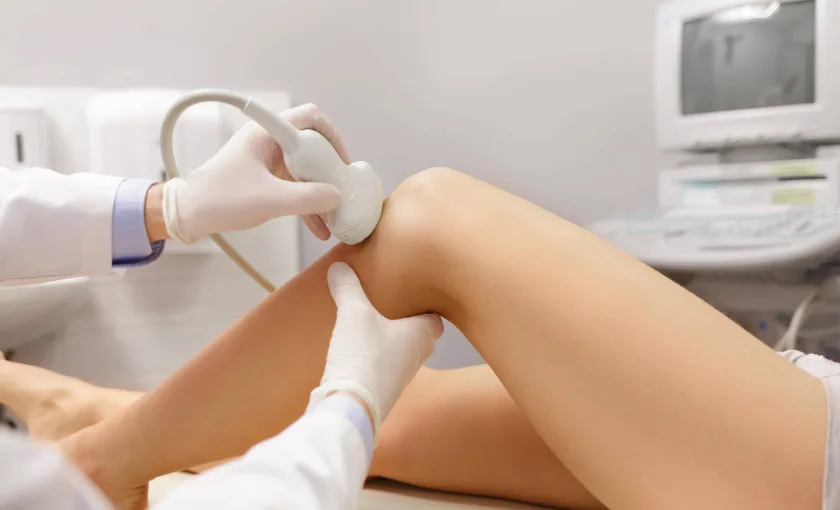
Duplex ultrasound can evaluate the treated veins and rule out certain venous complications, although ultrasound does not by itself diagnose every type of nerve injury.
Persistent neurological symptoms may require assessment outside of the venous system.
When Should I Contact My Doctor After Vein Treatment?
Contact your treating physician for symptoms such as:
- Persistent or worsening numbness
- Significant burning or shooting pain
- New weakness
- Difficulty moving the foot or leg normally
- Pain that continues to become worse
- Significant new swelling
- Increasing redness or warmth
- Fever or signs of infection
- Symptoms that are substantially different from your expected recovery
Seek urgent medical evaluation for new chest pain, shortness of breath, fainting, or other symptoms that could indicate a serious complication.
How Can Nerve Injury Risk Be Reduced During Vein Treatment?
Reducing risk starts with choosing the appropriate treatment for the affected vein and understanding the surrounding anatomy.
Depending on the procedure, clinicians may use:
- Duplex ultrasound guidance
- Careful catheter and needle placement
- Tumescent anesthesia around thermal ablation sites
- Treatment planning based on the relationship between veins and nerves
- Alternative treatment techniques when thermal nerve injury is a concern
For small saphenous vein ablation, studies have specifically examined ultrasound identification of the sural nerve as a way to help avoid nerve injury.
No technique eliminates every risk, but individualized planning can reduce avoidable injury.
Persistent Numbness or Pain After Varicose Vein Treatment
Most patients do not develop significant nerve injury after modern vein treatment, but numbness, tingling, sharp pain, or unusual sensations should not be dismissed when they persist.
BASS Vein Center provides evaluation and treatment for varicose veins, chronic venous insufficiency, and symptoms occurring before or after vein procedures.
Our vascular specialists can review previous treatment, examine your symptoms, and use vascular ultrasound when appropriate to determine whether a vein-related problem may still be present.
Frequently Asked Questions About Nerve Damage and Vein Treatment
What are the symptoms of nerve damage after varicose vein surgery?
Symptoms may include numbness, tingling, burning, abnormal sensitivity, reduced sensation, or sharp and shooting pain. The location depends on the nerve affected.
Is numbness normal after varicose vein surgery?
Temporary altered sensation can occur after some vein procedures. Persistent, worsening, or extensive numbness should be evaluated rather than assumed to be normal.
Why do I have sharp pain in my leg after varicose vein surgery?
Sharp or shooting pain can sometimes be associated with nerve irritation, but postoperative pain can also result from inflammation, bruising, hematoma, thrombophlebitis, or another complication. An examination may be needed to determine the cause.
Why does my leg hurt months after vein surgery?
Persistent pain can have several causes, including nerve irritation, residual or recurrent venous disease, scar-related symptoms, or a condition unrelated to the original vein treatment. Long-lasting pain deserves evaluation.
Can varicose veins cause numbness?
Numbness is not a classic symptom of uncomplicated varicose veins. Because many neurological and other medical conditions can cause numbness, the presence of varicose veins does not necessarily mean they are responsible.
Can varicose veins cause foot numbness?
Varicose veins should not automatically be assumed to cause foot numbness. Persistent numbness in the foot can have several causes and should be evaluated, particularly when accompanied by weakness, pain, or other neurological symptoms.
Do varicose veins cause tingling in the feet?
Some people with venous disease describe unusual leg sensations, but tingling in the feet is not specific to varicose veins. Nerve and other medical conditions can produce similar symptoms.
Can vein ablation cause nerve damage?
Yes. Thermal vein ablation can irritate a nearby sensory nerve, particularly where a saphenous vein and nerve travel close together. Temporary sensory changes are a recognized complication.
What are microphlebectomy side effects?
Possible microphlebectomy side effects include bruising, tenderness, swelling, hematoma, bleeding, infection, and sensory changes caused by irritation of nearby nerves.
Can phlebectomy cause nerve damage?
Yes. Nerve irritation or injury is a recognized complication of ambulatory phlebectomy because small sensory nerves may run close to superficial veins being removed.
What are common complications after varicose vein surgery?
Possible complications include pain, bruising, hematoma, wound problems, infection, nerve injury, superficial thrombophlebitis, blood clots, and recurrent varicose veins. The risk profile depends on the procedure performed.
Why do I have throbbing pain after sclerotherapy?
Pain can occur after sclerotherapy, and superficial thrombophlebitis is another recognized post-treatment effect that can cause tenderness and pain. Persistent or worsening symptoms should be evaluated.
Note: Coverage varies between insurance plans. Please check with your insurance provider before scheduling. BASS Vein Center will verify your benefits so you understand any out-of-pocket costs ahead of treatment.
Medical Disclaimer: The information provided in this blog is for educational and informational purposes only and is not intended as medical advice, diagnosis, or treatment. BASS Medical Group does not endorse any specific tests, treatments, procedures, or opinions referenced in this content. Individual results may vary. Always consult with your physician or a qualified healthcare provider regarding any medical concerns or before making changes to your health regimen.