
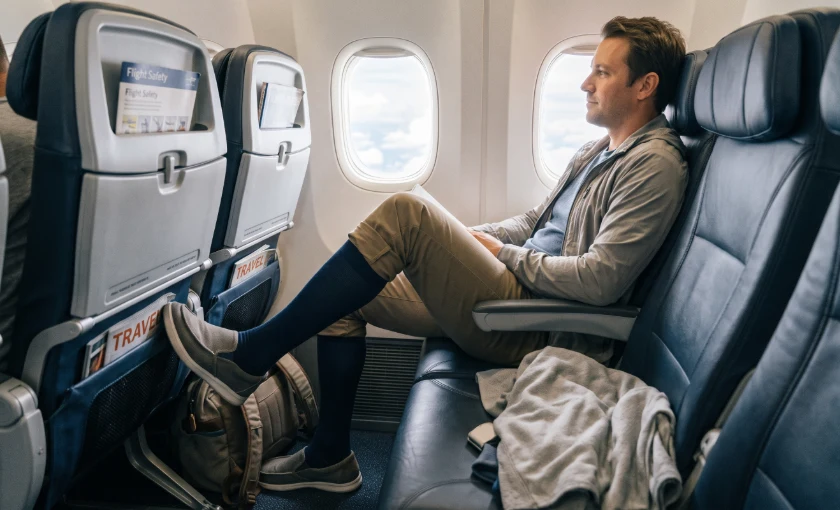
Should You Wear Compression Socks on a Plane?
Long flights often mean spending hours in the same seat with limited opportunities to move. By the time you land, your shoes may feel tighter, your ankles may look swollen, or your legs may feel heavy and stiff.
That raises a common question: Should you wear compression socks on a plane?
For many people, compression socks can help reduce swelling and make the legs feel more comfortable during a long flight. They may also be recommended for some travelers who have an increased risk of developing a blood clot.
However, not everyone needs compression socks simply because they are getting on an airplane.
Whether they are worth wearing depends on the length of your trip, whether your legs tend to swell, your medical history, and your individual risk factors for deep vein thrombosis, or DVT.
What Happens to Your Legs During a Long Flight?
The issue is not necessarily flying itself. It is sitting still for a long period of time.
The muscles in your calves normally help move blood from the legs back toward the heart when you walk. When you sit for several hours without much movement, that muscle-pump action decreases.
Blood and fluid can collect in the lower legs, contributing to:
- Swollen feet and ankles
- Leg heaviness
- Tightness
- Aching or discomfort
- Stiffness after sitting
This is also why similar symptoms can happen during a long car, train, or bus trip.
The CDC notes that travel lasting about four hours or longer can increase the risk of blood clots because sitting still for long periods slows blood flow in the legs. Even so, the overall risk remains low for most travelers.
How Do Compression Socks Help During a Flight?
Graduated compression socks apply controlled pressure to the legs.
The pressure is generally greatest around the ankle and gradually decreases higher up the leg. This helps support blood movement through the veins toward the heart.
During a flight, compression socks may help:
- Reduce ankle and lower-leg swelling
- Limit blood pooling in the legs
- Reduce feelings of heaviness or aching
- Support venous circulation during prolonged sitting
- Improve leg comfort during and after travel
Compression stockings are also commonly used to help manage symptoms associated with conditions such as chronic venous insufficiency and varicose veins.
For someone who already experiences swelling or heaviness from a vein condition, a long period of sitting may make those symptoms more noticeable.
Do Compression Socks Prevent Blood Clots on Flights?
Graduated compression stockings may help reduce the occurrence of symptomless DVT during long-distance travel and may be recommended for some people who have an increased risk of developing a blood clot.
That does not mean everyone taking a long flight needs them.
For healthy travelers without additional blood-clot risk factors, compression stockings are not routinely necessary solely to prevent DVT.
For travelers at higher risk, compression stockings may be one of several preventive measures a healthcare professional recommends.
Compression socks should also not replace movement during a flight.
Who Should Consider Compression Socks Before Flying?
Compression socks may be useful for travelers who regularly experience:
- Leg swelling
- Varicose veins
- Chronic venous insufficiency
- Leg heaviness or aching after prolonged sitting
- Other circulation-related leg symptoms
They may also be recommended for some people with a higher risk of blood clots.
According to the CDC, risk factors can include:
- A previous DVT or pulmonary embolism
- Recent surgery or significant injury
- Active cancer or recent cancer treatment
- Pregnancy or the postpartum period
- Estrogen-containing medications
- Limited mobility
- Certain blood-clotting disorders
- Family history of blood clots
- Older age
- Obesity
- Certain chronic medical conditions
Having one of these risk factors does not mean you will develop a blood clot during a flight.
However, people with increased risk should discuss long-distance travel with their healthcare provider.
Compression is also not appropriate for everyone. Talk with a healthcare professional before using compression stockings if you have known or suspected peripheral artery disease, significant arterial circulation problems, severe neuropathy, open wounds, or unexplained severe leg symptoms.
How Long Does a Flight Need to Be Before Compression Socks May Help?
There is no exact flight length at which everyone suddenly needs compression socks.
Travel lasting about four hours or longer is commonly considered long-distance travel when discussing blood-clot risk.
Compression may be more useful on longer flights, especially for people who already develop swelling, have varicose veins, or have other risk factors for venous problems.
Your individual health and clot risk matter more than the flight length alone.
When Should You Put Compression Socks On, and What Strength Should You Use?
If compression socks are appropriate for you, putting them on before significant swelling develops is generally more practical than waiting until your legs are already swollen.
For many travelers, that means putting them on before leaving home or before boarding the plane.
Compression stockings are available in different pressure levels, measured in millimeters of mercury, or mmHg.
The right strength depends on why you are wearing them, your medical history, and whether you have an underlying vein condition.
Stronger compression is not automatically better. Higher-strength medical compression should generally be selected with guidance from a healthcare professional.
Proper fit also matters. Compression socks should lie smoothly against the legs without rolling, folding, or bunching.
Do You Still Need to Move Around If You Wear Compression Socks?
Yes.
Compression socks should not be treated as a substitute for movement.
During a long flight, try to move your legs regularly and exercise your calf muscles.
When it is safe to do so, you can:
- Get up and walk periodically
- Flex and extend your ankles
- Raise and lower your heels
- Raise and lower your toes
- Contract and relax your calf muscles
- Change your seated position periodically
An aisle seat may make it easier to get up during a long flight.
The same principle applies to road trips. Take periodic breaks so you can stand, stretch, and walk.
Why Do My Legs or Ankles Swell After Flying?
Mild swelling in both ankles after a long flight can happen simply because you have been sitting for several hours.
Gravity and reduced calf-muscle movement allow more fluid to collect in the lower legs.
However, swelling that happens repeatedly after flights, road trips, workdays, or other periods of prolonged sitting may also be associated with an underlying vein condition such as chronic venous insufficiency.
Other symptoms can include:
- Leg heaviness
- Aching or cramping
- Varicose veins
- Itching
- Skin discoloration
- Swelling that becomes worse later in the day
If these symptoms happen regularly, a vascular evaluation can help determine whether the problem is temporary travel-related swelling or an underlying vein condition.
Is Leg Swelling After a Flight a Sign of DVT?
Not every swollen leg after a flight is a blood clot.
Travel-related fluid retention often affects both feet or ankles and may improve after walking and returning to normal activity.
DVT is different.
A deep vein thrombosis occurs when a blood clot forms in a deep vein, commonly in the leg.
Possible symptoms include:
- Swelling, particularly in one leg
- Unexplained pain or tenderness
- Warmth
- Redness or skin discoloration
Some people with DVT have no noticeable symptoms.
A clot can become especially dangerous if part of it travels to the lungs and causes a pulmonary embolism.
Symptoms such as sudden shortness of breath, unexplained chest pain, fainting, coughing up blood, or a rapid or irregular heartbeat require immediate medical attention.
Are Compression Socks Helpful for Varicose Veins When Flying?
They can be.
Long periods of sitting may make heaviness, aching, and swelling more noticeable in people with varicose veins or chronic venous insufficiency.
Graduated compression stockings can help support venous return and may reduce some of these symptoms during travel.
However, compression does not eliminate existing varicose veins or repair damaged vein valves.
If varicose veins regularly cause pain, swelling, heaviness, itching, or other symptoms, a vein specialist can determine whether additional treatment may be appropriate.
Should You Wear Compression Socks on Your Next Flight?
For some travelers, compression socks are a simple way to reduce swelling and improve leg comfort during a long flight.
They may be particularly worthwhile if you experience leg swelling, heaviness, varicose veins, or have certain risk factors for blood clots.
They are not necessary for everyone, and they should not replace regular movement during long flights.
If you have a history of DVT, significant vein disease, recent surgery, or another condition that affects circulation, talk with your healthcare provider before traveling about whether compression stockings or other preventive measures may be appropriate.
Traveling With Swollen, Heavy or Aching Legs?
If long flights or extended periods of sitting consistently cause swelling, heaviness, aching, or discomfort in your legs, the problem may extend beyond the flight itself.
BASS Vein Center specialists evaluate and treat varicose veins, chronic venous insufficiency, and other vein conditions that can contribute to recurring leg symptoms.
A vascular evaluation can help determine whether your symptoms are simply related to prolonged sitting or whether an underlying vein condition may be contributing.
Find a BASS Vein Center location or request an appointment online.
Frequently Asked Questions
Should you wear compression socks on a long flight?
Compression socks may help reduce leg swelling and discomfort during long flights and may be recommended for some travelers at increased risk of blood clots. They are not necessary for everyone. Your medical history, clot risk, vein health, and length of travel can help determine whether compression is appropriate.
How long should a flight be before wearing compression socks?
There is no single flight length that means everyone needs compression socks. Travel lasting about four hours or longer is generally considered long-distance travel when discussing blood-clot risk. People with additional risk factors should ask a healthcare provider whether compression is appropriate.
Do compression socks prevent DVT while flying?
Graduated compression stockings may reduce the occurrence of symptomless DVT during long-distance travel and may be recommended for travelers with increased clot risk. They do not eliminate the possibility of a blood clot and should not replace regular movement during a long trip.
Why do my legs swell when I fly?
Sitting for several hours reduces calf-muscle movement and can allow fluid to collect in the lower legs. Mild swelling may be temporary, but repeated or significant swelling can also be associated with chronic venous insufficiency or another medical condition.
Note: Coverage varies between insurance plans. Please check with your insurance provider before scheduling. BASS Vein Center will verify your benefits so you understand any out-of-pocket costs ahead of treatment.
Medical Disclaimer: The information provided in this blog is for educational and informational purposes only and is not intended as medical advice, diagnosis, or treatment. BASS Medical Group does not endorse any specific tests, treatments, procedures, or opinions referenced in this content. Individual results may vary. Always consult with your physician or a qualified healthcare provider regarding any medical concerns or before making changes to your health regimen.