.webp)
Spider Veins: 5 Common Symptoms and How to Find Relief
Spider veins are small, visible blood vessels that form thin, branching lines or web-like clusters near the surface of the skin. They may appear red, blue, purple, or sometimes green and are especially common on the legs, ankles, and face.
For many people, spider veins are primarily a cosmetic concern and cause no physical symptoms. Others may notice itching, burning, tenderness, cramping, or discomfort around the affected area.
Understanding what spider veins look like and which symptoms may require further evaluation can help you decide whether treatment is appropriate.
What Do Spider Veins Look Like?
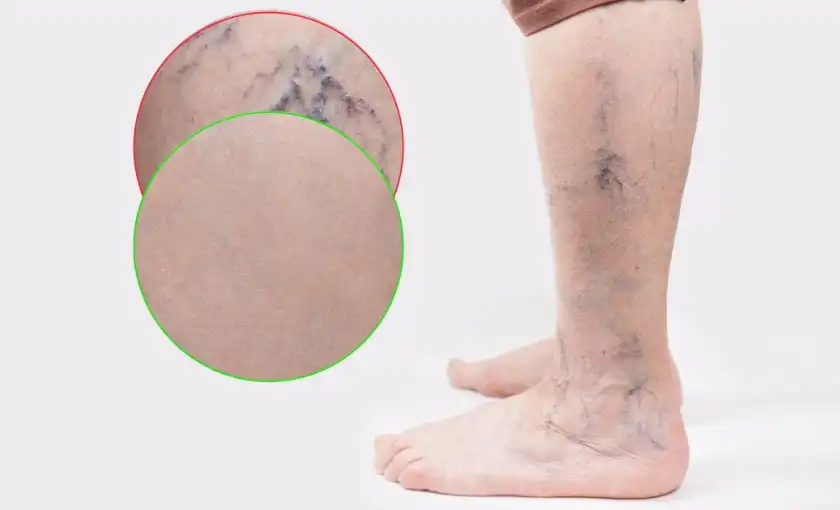
Spider veins typically look like thin red, blue, or purple lines just beneath the skin. They may appear individually or form branching patterns that resemble a spider web or tree branches.
Unlike larger varicose veins, spider veins generally lie flat against the skin rather than appearing as raised, twisted, or rope-like veins.
.webp)
Spider veins most commonly appear on the:
- Thighs
- Calves
- Ankles
- Feet
- Face
Mayo Clinic describes spider veins as thin lines or web-like networks of blood vessels on the skin, most commonly affecting the legs and feet.
Spider Veins on the Legs and Ankles
Spider veins on the legs are particularly common because the veins in the lower body work against gravity to return blood toward the heart.
They may develop around the thighs, calves, knees, feet, or ankles.
Spider veins on the ankles may appear as clusters of tiny red, purple, or blue vessels. If visible veins around the ankles occur along with significant swelling, skin discoloration, heaviness, or other persistent symptoms, a vein evaluation can help determine whether an underlying venous condition is present.
What Are the Symptoms of Spider Veins?
Many spider veins cause no discomfort at all. When symptoms do occur, they can vary from mild irritation to localized pain or aching.
Here are five possible spider vein symptoms.
1. Visible Red, Blue, or Purple Veins
The most recognizable sign of spider veins is their appearance.
Small vessels become visible through the skin as:
- Fine red lines
- Blue or purple veins
- Web-like clusters
- Branching patterns
These vessels typically remain flat rather than protruding from the skin.
2. Itching or Skin Irritation
Some people experience itching or irritation around clusters of spider veins.
The skin may feel mildly sensitive or uncomfortable even when there are no other obvious symptoms.
3. Burning or Tenderness
Spider veins can occasionally cause a localized burning, pinching, or tender sensation.
Cleveland Clinic notes that while spider veins are usually asymptomatic, some people experience itching, burning, cramping, or discomfort.
4. Aching or Cramping
Some people report aching or cramping in areas where spider veins are present.
However, significant or persistent leg aching should not automatically be blamed on spider veins. Other conditions, including varicose veins or chronic venous insufficiency, can also cause leg discomfort.
5. Tired or Uncomfortable Legs
Some people with spider veins report tired or uncomfortable legs, particularly after spending long periods standing.
If heaviness, swelling, or aching becomes prominent, an evaluation may be useful to determine whether a deeper vein problem is contributing to the symptoms.
Are Spider Veins Painful?
Most spider veins are not painful. They are commonly a cosmetic concern rather than a source of significant physical discomfort.
However, spider veins can sometimes be associated with:
- Burning
- Itching
- Tenderness
- Mild aching
- Cramping
The amount of discomfort varies from person to person.
Why Do My Spider Veins Hurt?
Pain directly over a cluster of spider veins may feel like mild burning, tenderness, itching, or sensitivity.
But painful spider veins deserve closer attention when the discomfort is significant, persistent, or accompanied by other symptoms.
For example, pain along with:
- Leg swelling
- Heaviness
- Larger bulging veins
- Skin discoloration
- Increasing tenderness
may indicate another venous condition is contributing rather than the small spider veins alone.
Are Painful Spider Veins Dangerous?
Pain does not automatically mean spider veins are dangerous.
Most spider veins are small superficial blood vessels and do not cause serious health problems. However, persistent pain or other leg symptoms should be evaluated when the cause is unclear.
Spider veins may sometimes occur alongside larger varicose veins or chronic venous insufficiency, which require a different type of evaluation and treatment.
What Causes Spider Veins on the Legs?
Spider veins can develop for several reasons.
Factors that may contribute include:
- Family history
- Increasing age
- Pregnancy
- Hormonal changes
- Prolonged sitting or standing
- Excess pressure on veins in the legs
- Previous vein problems
Spider veins can also develop on the face, where sun exposure and skin changes may play a greater role.
How Can I Relieve Spider Vein Symptoms?
Spider veins do not always require treatment. If symptoms are mild, lifestyle measures may help with general leg comfort.
Stay Active
Walking and regular movement activate the calf muscles and help support normal blood movement through the legs.
Avoid Long Periods of Inactivity
If you sit or stand for long periods, take regular breaks to walk or change positions.
Elevate Your Legs
For people who also experience mild swelling or heaviness, elevating the legs while resting may provide temporary relief.
Maintain a Healthy Weight
Maintaining a healthy weight can reduce excess pressure on the veins of the lower extremities.
Ask About Compression
Compression stockings may be appropriate for some people with venous symptoms, although they are not necessary for every person with spider veins.
A healthcare provider can help determine whether compression is appropriate based on your circulation and symptoms.
Do Spider Veins Go Away on Their Own?
Established spider veins generally do not disappear simply because you exercise, change your diet, or use a topical home remedy.
Their appearance may seem more or less noticeable depending on lighting, skin tone, or other factors, but medical or cosmetic treatment may be needed if your goal is to remove visible vessels.
How Are Spider Veins Treated?
Treatment depends on the location and extent of the spider veins, your symptoms, and whether another vein condition is present.
Sclerotherapy
Sclerotherapy is commonly used to treat spider veins and small varicose veins.
A healthcare professional injects a solution into the affected vessel, causing it to close. The treated vein gradually fades as blood is redirected through other vessels. Mayo Clinic identifies sclerotherapy as a common treatment used to close visible varicose and spider veins.
Other Vein Treatments
If an evaluation shows that symptoms are related to larger abnormal veins or underlying venous insufficiency, treatment may involve other procedures.
These can include:
These treatments are not automatically treatments for small spider veins themselves. The appropriate procedure depends on what a vascular evaluation finds.
When Should I See a Vein Specialist?
Consider scheduling an evaluation if your spider veins:
- Become painful or increasingly tender
- Occur with significant swelling
- Appear alongside larger varicose veins
- Are accompanied by leg heaviness or persistent aching
- Occur with skin discoloration or other skin changes
- Are causing cosmetic concerns that you would like treated
A vein specialist can distinguish isolated spider veins from symptoms related to deeper venous disease.
Spider Vein Treatment at BASS Vein Center
BASS Vein Center evaluates and treats spider veins, varicose veins, chronic venous insufficiency, and other venous conditions.
If your spider veins are painful, uncomfortable, or causing cosmetic concerns, our specialists can determine which treatment approach is appropriate.
Find a BASS Vein Center location or request a consultation online.
Call 925-477-3030 to learn more.
Frequently Asked Questions
What do spider veins look like?
Spider veins appear as small red, blue, or purple lines close to the surface of the skin. They often form branching or web-like patterns and commonly appear on the legs, ankles, feet, or face.
What are the symptoms of spider veins?
Many spider veins cause no symptoms. When symptoms occur, they may include itching, burning, tenderness, cramping, aching, or tired legs.
Are spider veins painful?
Usually not. Most spider veins are painless, but some people experience localized burning, itching, tenderness, or discomfort.
Why do my spider veins hurt?
Mild discomfort can occur around spider veins, but significant pain may have another cause. Pain accompanied by swelling, larger veins, heaviness, or skin changes should be evaluated.
Are spider veins on the ankles normal?
Spider veins can commonly develop around the ankles and legs. If ankle spider veins occur with swelling, skin discoloration, pain, or other significant symptoms, consider having your circulation evaluated.
Can spider veins be treated?
Yes. Sclerotherapy is one of the most commonly used treatments for spider veins. Other treatment options may be appropriate depending on the vessels involved and whether underlying venous disease is present.
Note: Coverage varies between insurance plans. Please check with your insurance provider before scheduling. BASS Vein Center will verify your benefits so you understand any out-of-pocket costs ahead of treatment.
Medical Disclaimer: The information provided in this blog is for educational and informational purposes only and is not intended as medical advice, diagnosis, or treatment. BASS Medical Group does not endorse any specific tests, treatments, procedures, or opinions referenced in this content. Individual results may vary. Always consult with your physician or a qualified healthcare provider regarding any medical concerns or before making changes to your health regimen.