What Do Bulging Veins Mean?
Bulging veins are enlarged or prominent veins that are easier to see beneath the skin. They can appear on the legs, arms, hands, feet, and other areas of the body.
Sometimes bulging veins are completely normal. Exercise, aging, genetics, body composition, and heat can all make superficial veins more noticeable. In other cases, particularly in the legs, bulging veins may be associated with varicose veins or another venous condition.
Cleveland Clinic notes that bulging veins are usually harmless but can occasionally indicate an underlying vascular problem.
Understanding where the vein is bulging, when it appeared, and whether you have other symptoms can help determine whether it needs medical attention.
What Are Bulging Veins?
Bulging veins are superficial veins that appear enlarged, raised, or unusually prominent beneath the skin.
They may look:
- Blue, green, or purple
- Raised above the surrounding skin
- Twisted or rope-like
- More noticeable during exercise
- More prominent when standing
- Larger than nearby veins
Not every visible or protruding vein is a varicose vein.
Varicose veins are specifically enlarged superficial veins that commonly develop because valves inside the vein allow blood to flow backward, or reflux, increasing pressure within the vein.
What Causes Bulging Veins?
There are several reasons veins may become more prominent.
Common causes include:
- Exercise
- Lower levels of body fat
- Aging and thinner skin
- Genetics
- Heat
- Pregnancy
- Prolonged standing
- Varicose veins
- Chronic venous insufficiency
- Certain vascular conditions
The location of the veins and the presence of other symptoms can help distinguish normal visible veins from veins associated with a medical condition.
What Do Bulging Veins in the Legs Mean?
Bulging veins in the legs are commonly associated with varicose veins.
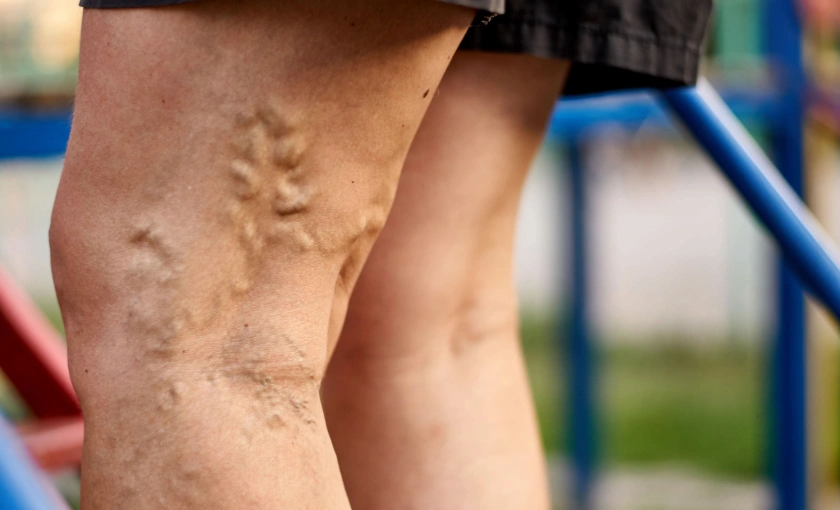
Varicose veins typically appear enlarged, twisted, swollen, or rope-like beneath the skin. They develop when venous valves do not function properly and pressure increases within superficial veins.
In addition to visible big veins in the legs, symptoms may include:
- Aching
- Leg heaviness
- Swelling
- Throbbing
- Burning
- Itching
- Cramping
- Leg fatigue
Some people have prominent varicose veins without significant discomfort.
Why Are Veins Popping Out of My Legs?
Veins may temporarily become more prominent during or shortly after exercise because blood flow increases and superficial vessels become easier to see.
But if veins are consistently popping out of your legs, particularly if they look twisted or rope-like, they may be varicose veins.
Persistent bulging veins accompanied by aching, swelling, heaviness, itching, or skin changes may warrant evaluation for chronic venous insufficiency.
Chronic venous insufficiency can cause visible varicose veins along with swelling, heaviness, pain, itching, and skin changes.
What Do Bulging Veins in the Arms Mean?
Bulging veins in the arms are often normal, particularly when they develop during exercise or have been visible for a long time without other symptoms.
Arm veins may become more noticeable because of:
- Weightlifting or exercise
- Increased blood flow
- Lower body fat
- Genetics
- Aging
- Heat
Prominent arm veins themselves are not necessarily evidence of poor circulation or vein disease.
Why Do My Arm Veins Bulge During Exercise?
Exercise increases blood flow to working muscles, which can temporarily make superficial veins more prominent.
This is particularly noticeable during activities involving the upper body, such as resistance training.
For many people, the veins become less prominent after exercise and rest.
Bulging Veins in Athletes
Athletes and physically active people may have particularly noticeable arm or leg veins because of increased muscle development, exercise-related blood flow, and lower levels of tissue between the veins and skin.
Can You Get Varicose Veins in Your Arms?
Varicose veins can occur outside the legs, but they are much more common in the legs. The NHS notes that varicose veins are most common in the legs but can develop elsewhere.
A persistently enlarged or unusual vein in an arm should not automatically be labeled a varicose vein.
Other vascular conditions can cause prominent arm veins, particularly when accompanied by swelling, heaviness, discoloration, or pain. For example, venous thoracic outlet syndrome can produce one-sided arm and hand symptoms including swelling, heaviness, and blue or purple discoloration.
If a bulging arm vein is new or accompanied by significant symptoms, medical evaluation is appropriate.
When Should a Bulging Vein in Your Arm Be Checked?
Consider having a bulging vein in your arm evaluated if it:
- Appears suddenly
- Is painful or tender
- Becomes red or warm
- Is associated with significant arm swelling
- Occurs mostly on one side with new symptoms
- Feels unusually firm
- Is accompanied by skin discoloration
A newly enlarged vein with swelling or pain has a different clinical significance than arm veins that have gradually become more visible over many years.
Why Are the Veins in My Hands Bulging?
Bulging veins in the hands are extremely common, especially with aging.
As skin and underlying tissues change with age, superficial hand veins may become easier to see.
Hand veins can also become more noticeable because of:
- Exercise
- Heat
- Genetics
- Lower body fat
- Temporary changes in circulation
Bulging veins commonly occur in the hands as well as the legs, feet, and ankles and are often harmless.
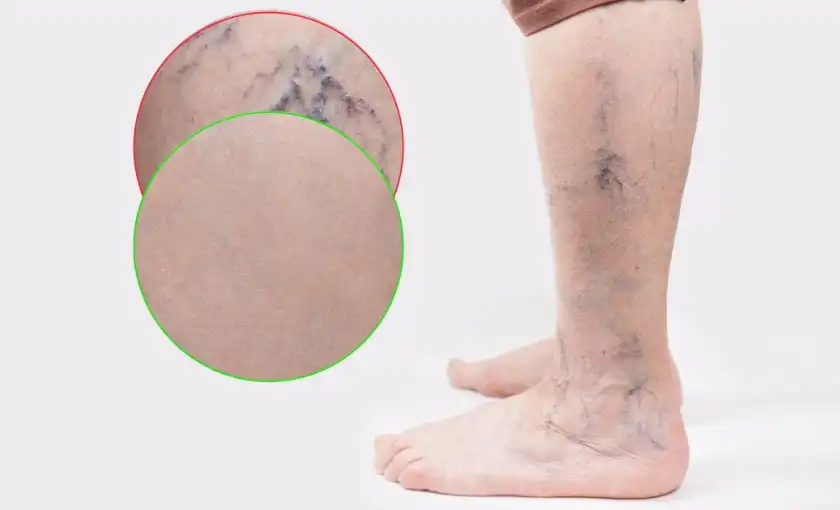
Are Bulging Veins the Same as Spider Veins?
No.
Spider veins are much smaller vessels visible close to the surface of the skin.
They typically appear as thin red, blue, or purple lines forming web-like or branching patterns.
Bulging varicose veins are generally larger, raised, and more rope-like.
When Are Bulging Veins a Sign of Varicose Veins?
Bulging leg veins are more likely to represent varicose veins when they:
- Remain enlarged at rest
- Appear twisted or rope-like
- Become more prominent while standing
- Occur with leg aching
- Occur with heaviness or fatigue
- Are associated with swelling
- Cause itching or tenderness
Varicose veins are superficial veins that have become widened and bulging because of abnormal pressure and venous reflux.
Are Bulging Veins Dangerous?
Most visible or bulging veins are not dangerous.
However, whether a vein deserves evaluation depends on its location, how suddenly it appeared, and whether other symptoms are present.
Varicose veins may sometimes be associated with complications such as inflammation, bleeding, skin changes, or venous ulcers, particularly when more advanced venous disease is present.
A sudden change accompanied by significant swelling, pain, warmth, discoloration, or other concerning symptoms should receive medical attention.
How Are Bulging Leg Veins Diagnosed?
If bulging leg veins appear to be related to varicose veins or venous insufficiency, evaluation typically begins with a medical history and physical examination.
A duplex ultrasound may be used to:
- Examine blood flow
- Identify venous reflux
- Determine which veins are affected
- Evaluate vein anatomy
- Help guide treatment decisions
The appearance of the surface veins alone does not always reveal where the underlying reflux originates.
How Are Bulging Varicose Veins Treated?
Treatment depends on whether the veins are simply visible or associated with venous reflux and symptoms.
Conservative measures may include:
- Regular walking
- Avoiding prolonged inactivity
- Leg elevation
- Compression therapy when appropriate
For symptomatic varicose veins, treatment may involve closing or removing abnormal veins.
Radiofrequency Ablation
Radiofrequency ablation uses controlled thermal energy to close certain refluxing superficial veins.
Endovenous Laser Treatment
Endovenous laser treatment uses laser energy delivered through a catheter to close an abnormal vein.
VenaSeal™
VenaSeal™ uses a medical adhesive to close certain refluxing veins.
Sclerotherapy
Sclerotherapy involves injecting a solution into an abnormal vein to cause it to close.
Ambulatory Phlebectomy
Ambulatory phlebectomy removes larger visible surface varicose veins through very small openings in the skin.
The appropriate treatment depends on the location of the vein, symptoms, and ultrasound findings.
When Should You See a Vein Specialist?
Consider a vein evaluation if bulging leg veins are accompanied by:
- Persistent aching
- Leg heaviness
- Swelling
- Painful varicose veins
- Skin discoloration
- Itching or skin irritation
- Increasingly prominent veins
- A slow-healing wound around the lower leg or ankle
A vein specialist can determine whether the visible veins are primarily cosmetic or associated with underlying venous reflux.
Bulging Vein Treatment at BASS Vein Center
Bulging veins can have many causes, and not every prominent vein requires treatment.
When bulging veins in the legs are associated with varicose veins, swelling, aching, heaviness, or other symptoms, BASS Vein Center can evaluate whether underlying venous disease is contributing.
Schedule a vein evaluation or call 925-477-3030 to discuss your symptoms and treatment options.
Frequently Asked Questions
What do bulging veins mean?
Bulging veins may be caused by exercise, genetics, aging, body composition, heat, or an underlying venous condition. Persistent bulging leg veins may be varicose veins, particularly when accompanied by aching, swelling, or heaviness.
Why are the veins in my arms bulging?
Arm veins commonly become more prominent during exercise, with aging, because of genetics, or when there is less tissue between the veins and skin. New bulging arm veins accompanied by swelling, pain, or discoloration should be evaluated.
Are bulging arm veins normal?
Often, yes. Visible or protruding arm veins are common, especially during exercise and in people whose superficial veins are naturally more noticeable.
Can you get varicose veins in your arms?
Varicose veins can occur outside the legs, although they are much more common in the lower extremities. Persistently enlarged arm veins with other symptoms should be evaluated rather than automatically assumed to be varicose veins.
Why are veins popping out of my legs?
Leg veins may temporarily become more visible during exercise. Persistent enlarged, twisted, or rope-like leg veins may represent varicose veins.
What causes big veins in the legs?
Large visible leg veins can result from varicose veins, exercise, genetics, aging, or other factors. Varicose veins develop when abnormal venous pressure causes superficial veins to enlarge.
Are bulging veins dangerous?
Most bulging veins are not dangerous. However, sudden changes or veins accompanied by significant pain, swelling, warmth, discoloration, or other new symptoms should be medically evaluated.
Note: Coverage varies between insurance plans. Please check with your insurance provider before scheduling. BASS Vein Center will verify your benefits so you understand any out-of-pocket costs ahead of treatment.
Medical Disclaimer: The information provided in this blog is for educational and informational purposes only and is not intended as medical advice, diagnosis, or treatment. BASS Medical Group does not endorse any specific tests, treatments, procedures, or opinions referenced in this content. Individual results may vary. Always consult with your physician or a qualified healthcare provider regarding any medical concerns or before making changes to your health regimen.